raja ampat
Navigating The Impact of Tourism“The World’s Most Beautiful Islands” is how Raja Ampat was once described; a remote archipelago, sparsely populated with a few small villages, home to the world’s most biodiverse coral reefs, abundant with life, colour and movement. It is not hard to see how this cluster of islands came to be described as the most beautiful on Earth, with its stunning scenery above and below the water attracting divers, snorkelers an nature lovers each year, all of whom depart deeply moved by the natural beauty. Yet it is this very same natural beauty that leaves this environmentally sensitive region vulnerable to exploitation and over-tourism, and has earned it a new, more alarming title; ‘Raja Ampat, The Last Paradise’.
With its remote location and poor accessibility, to date relative isolation and low human population (50,000 local inhabitants) has been Raja Ampat’s greatest defence against overuse and exploitation, however, with increasing ease of access, promotional campaigns combined with social media and word of mouth, the past 5-7 years has seen rapid spike in tourism activity and development.
Click to navigate: Conservation & Community | Minimising Your Impact | Mitigating Your Impact | Impact of Tourism
visiting raja ampat
Contribute to Conservation & Community
At The SEA People, we believe that one of the greatest positive influences on the state of the environment in Raja Ampat’s marine environment can, and should be, the tourism industry. We believe that each and every individual tourist and tourism operator must make a firm and conscious commitment to genuinely responsible tourism practice, beyond simply the basics. If tourists behave responsibly and demand genuine responsible and sustainable practice from tourism operators, and practice it themselves, Raja Ampat’s vibrant and abundant reefs can continue to provide important biological, socio-cultural and economic services in the region, including food, shelter, livelihoods and enjoyment for thousands of people, both now and into the future.
Join us for a day of Reef Restoration, and make a lasting contribution to Restoring, Protecting and Conserving Raja Ampat’s reefs.
Exploring the stunning marine landscapes of Raja Ampat comes with a hidden cost: the environmental footprint left behind by travel, from carbon emissions to local ecological impacts such as pollution and waste. Recognizing this, we invite you to transform your visit into a meaningful journey of regeneration and giving forward. Instead of merely trying to compensate for the impacts made, we encourage a more proactive approach to conservation that has a lasting impact beyond the duration of your stay.
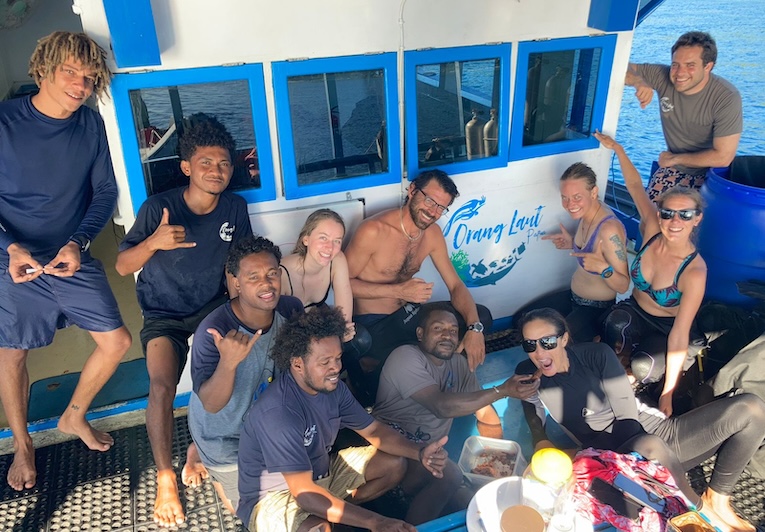
Spending the day with our local team you will:
- Learn more about the threats to Raja Ampat’s reefs, and why reef restoration is important in Raja Ampat
- See firsthand, the ‘other Raja Ampat’ (the one that is not often publicised and frequently overlooked)
- Discover reef restoration theory and techniques
- Be hands-on in the restoration of an area of degraded reef
- Contribute to the livelihoods of local community members — the custodians of Raja Ampat’s reefs — who dedicate their time, energy, and local knowledge to conserving, restoring, and protecting their reefs, and who will be working shoulder to shoulder with you throughout the day.
This program operates on a ‘donate to participate’ model, and serves as an important fundraising activity to enhance and expand the restoration effort. To find out how you can join us for a day of reef restoration, please contact us using this form.
JOIN US FOR A DAY OF REEF RESTORATION
*Whilst we make every effort to accommodate all those that enquire, dates are subject to availability and minimum numbers (4pax) apply. Contact us for more details!
visiting raja ampat
How To Minimise Your Impact
The moment you set foot in Raja Ampat, you are not simply a visitor, you are a part of the delicate ecosystem, both above and below the water. And as a visitor who is part of the ecosystem, it’s important to recognise your actions and behaviour have direct impact and influence on the environment you have travelled (and paid!) to see, and therefore it’s it’s crucial to tread lightly, acknowledging and respecting the symbiotic relationship between the environment, local communities and visitors.
Minimizing your impact is more than a courtesy; it’s a responsibility that extends from navigating the marine environment, respecting cultural traditions and norms, managing waste conscientiously and embracing good practices that ensure your presence adds value and does not detract from the natural and cultural splendour of Raja Ampat. The following sections will guide you on how to actively participate in conserving Raja Ampat’s unique heritage, making sure the only trace you leave is a positive one.
LOCAL COMMUNITIES AND CULTURE
Respect the cultures and communities you visit by familiarizing yourself with local traditions before your arrival. Understanding local customs not only prevents misunderstandings and potentially disrespectful behaviors but also enriches your interactions with community members.
Be aware of local ceremonies and significant religious observances, respecting the beliefs and practices of your hosts on these days. For instance, Sundays are typically reserved for church, rest, and family in many communities; refrain from insisting on tours or activities from your host on such days.
Avoid handing out sweets, books, clothing, or other items directly to children in villages; instead, contribute to a recognized local organization or NGO that can distribute these gifts in a fair and appropriate way.
Consider the relevance and necessity of your donations; occasionally, donated items may not be suitable or remain unused, simply creating waste in the region. It’s best to consult with a local NGO or organization beforehand to understand what contributions would be genuinely beneficial to the community.
When photographing people or their homes, always seek permission first, especially when the subjects are children. This shows respect for community members privacy and dignity. Consider how such behaviour would be recieved in your community at home – where it would likely be poorly tolerated, unaccepted, or even illegal.
Additionally, refrain from entering villages or interacting with local community members in bikinis, swimwear, or revealing attire. Nudity or near-nudity is considered inappropriate and is not part of the local culture, even if local residents are too polite to express discomfort. Observe the attire of local community members and attempt to dress similarly as a sign of respect and cultural sensitivity.
MINIMISING WASTE & WASTE DISPOSAL
Waste Production & Management is a critical environmental concern where individuals have significant control. Raja Ampat lacks waste management facilities, with minimal waste processing and recycling available in the nearest cities of Waisai and Sorong. Without proper facilities, waste disposal often resorts to burning, landfilling, or in many cases – dumping (on land or in sea). Thus, minimizing waste production, especially plastic, becomes crucial.
To reduce your waste footprint and pollution in the region, consider these simple actions:
– Never litter, it’s irresponsible, disrespectful and violates Marine Park rules.
– Avoid buying plastic-bottled drinks (instead, bring a reusable bottle to refill from larger water containers) or plastic wrapped items. Try to bring everything that you will need from you home country, and unpackage these items before your trip to reduce waste in Raja Ampat.
– If there is a need to shop, bring a cloth shopping bag to eliminate the need for plastic bags, and refuse a plastic bag when offered.
– Refrain from buying or discarding plastic items in Raja Ampat, Sorong, or Waisai. If you must purchase or use plastic, take it back with you to your home country or location for responsible disposal. Consider: if you’re not comfortable to take your plastic waste home with you and disposing of it there, should you be comfortable leaving it for someone else to dispose of in Raja Ampat?
Additionally, do not dispose of batteries locally due to the lack of disposal options. Bring used batteries back with you for proper disposal.
WATER CONSUMPTION, WASTE AND CHEMICAL POLLUTION
Raja Ampat’s islands lack a centralized water supply, depending instead on collected rainwater and the boiling of limited non-potable groundwater. Water remains a critical asset for both the local population and the rapidly expanding tourism sector. To reduce your environmental footprint regarding wastewater and chemical pollution, consider the following advice:
– Practice water conservation; vacationing often leads to longer showers, but keeping them brief conserves this valuable resource.
– Choose your personal care products wisely. Products used in showers and sinks often end up in the ocean or are processed by basic sanitation, leading to potential pollution and eutrophication. Opt for marine-safe personal care items. Accommodations might not always offer products that are benign to marine ecosystems, therefore it is essential you bring this from home.
– Select only reef-safe sunscreens; certain ingredients in conventional sunscreens can damage coral polyps. Again, you must bring this with you from home.
Being conscious of these practices helps preserve Raja Ampat’s delicate marine environment, ensuring its vitality for future generations and the continued success of its tourism industry.
Ask you tourism operator or host how they manage their waste water – it is only through consumer inquiry and demand that improved waster water management will occur.
DIVING, SNORKELLING AND WATER BASED ACTIVITIES
Remember, when you are in Raja Ampat, you become part of a sensitive ecosystem, therefore, it is crucial you are aware of, and moderate your behaviour accordingly, such that your only impact.. is your bubbles.
DO NOT:
– Touch, chase, or disturb marine wildlife
– Ask your guide to touch, chase or disturb wildlife or coral for the sake of a ‘better’ viewing experience, photo or video
– Engage in capture/release activities with marine wildlife
– Walk on, touch, or break corals. Always maintain awareness of your buoyancy and position to avoid touching coral at all times.
– Feed marine life human food
– Ignore Marine Park Regulations, as well as Regency, Province, or National Indonesian laws that protect the marine environment.
DO:
– Advocate for and expect, environmental awareness and responsible behavior from all dive, snorkel and tour guides and tourism operators.
– SPEAK UP if you witness harmful practices, if deemed necessary, report such behaviour to your dive/snorkel operator or the Raja Ampat Marine Park Authority.
Following these simple guidelines ensures your activities contribute positively to the preservation of Raja Ampat’s sensitive marine ecosystem.
BEFORE YOUR VISIT - CONSIDER YOUR CARBON FOOTPRINT
Globally, aviation produced around 2.4% of total CO2 emmissions (of which a whopping 88% is tourism and leisure-related flying) and 5% of the emissions that contribute to the world’s climate-warming problem. Air travel is just about the most unsustainable thing an individual can do in terms of climate impact.
So, given the fact that climate change is the single biggest threat to coral reefs worldwide, how is it possible to have an eco-friendly holiday in Raja Ampat to see the world’s most biodiverse coral reefs, considering the amount of harm we cause simply by…. arriving?
Find out what you can do to mitigate your impact, before, during and after your stay HERE
VISITING RAJA AMPAT
Mitigating Your Impact
Visiting Raja Ampat offers a unique opportunity to experience the world’s most biodiverse coral reefs, but it also comes with significant environmental responsibilities. Mitigating your impact means taking conscious actions to reduce the negative effects of your travel on this fragile ecosystem. While tourism brings economic benefits to local communities, it also contributes to CO2 emissions and environmental degradation. To truly embrace eco-tourism in Raja Ampat, travelers must move beyond superficial greenwashing and engage in genuine sustainable and regenerative practices. This involves thoughtful planning before, during, and after your trip—reducing carbon emissions, supporting local conservation efforts, and making environmentally responsible choices. By doing so, you can help preserve the natural beauty of Raja Ampat for future generations, proving that it is indeed possible to enjoy this paradise while minimizing your environmental footprint.
To calculate your CO2 emissions when visiting Raja Ampat, and for suggestions on how to reduce impact, please visit “Your Carbon Footprint when visiting Raja Ampat, and how to reduce it”
TOURISM in RAJA AMPAT
Part of the Solution…?
Once a viable solution to a number of environmental threats and a path to sustainable economic growth, tourism was originally a means by which to support the implementation of Marine Protected Areas, eliminate illegal and unsustainable fishing and provide employment and alternative livelihoods to local community members. In many ways, to this day, this serves as a model and example for sustainable tourism in Indonesia and around the world. Yet, as with many nature-based tourism efforts, the fine line between sustainable and unsustainable has not been clearly defined and has become increasingly blurred and misinterpreted. The promotion and word of mouth relating to the archipelago’s natural beauty drew unprecedented attention and visitation, and this influx and expansion has escalated into area specific over-tourism, which now manifests in various forms of environmental strain (and in some instances cultural displacement and social inequality), in some locations challenging the perception that Raja Ampat is an ‘untouched paradise’.
Whilst many locations within Raja Ampat remain largely untouched and unexplored, those areas that receive the majority of tourism activity, are beginning to show evidence of over-tourism in the form of increasing degradation of coral reefs, increased waste, crowded coastal development and the over-crowding of sites that were once serene, all of which undermines both ecological balance and the quality of visitor experience.
It is now time to rethink the tourism in Raja Ampat, and shift towards a model that does not just mitigate impact and sustain environments, towards one that, from the outset, has a net positive impact on the region – for both people and place.
December 2023: 60+ people and x3 mantas | Overcrowding at Manta Ridge | A booking system similar to the Manta Sandy Dive Site has now been implemented to alleviate overcrowding, enhance visitor experience, and most importantly alleviate pressure on manta aggregations.
100% of your donation goes to
the field.
Donateur français Cliquez ici
If left unchecked, 90% of coral reefs will be threatened by 2030, with almost all reefs facing, high, very high, or critical threat levels by 2050.
If we don’t act now, future generations will not have the privilege of seeing a live coral reef, let alone receive the benefits that coral reefs provide, including food, coastal protection, livelihoods and medicine.
In Raja Ampat, Indonesia, the most biodiverse coral reefs on Earth are under threat; rapid and unsustainable development combined with climate change threaten the future of these reefs, along with the food security, heritage and livelihoods of many.
Your contribution today has a direct impact in enabling our team to work with local people to Restore, Protect and Conserve reefs in the world’s last remaining coral stronghold.
We cannot do it alone, but with your contribution we can do it together.
100% of your donation goes to
the field.
Donateur français Cliquez ici
If left unchecked, 90% of coral reefs will be threatened by 2030, with almost all reefs facing, high, very high, or critical threat levels by 2050.
If we don’t act now, future generations will not have the privilege of seeing a live coral reef, let alone receive the benefits that coral reefs provide, including food, coastal protection, livelihoods and medicine.
In Raja Ampat, Indonesia, the most biodiverse coral reefs on Earth are under threat; rapid and unsustainable development combined with climate change threaten the future of these reefs, along with the food security, heritage and livelihoods of many.
Your contribution today has a direct impact in enabling our team to work with local people to Restore, Protect and Conserve reefs in the world’s last remaining coral stronghold.
We cannot do it alone, but with your contribution we can do it together.
Copyright © The SEA People 2016-2026. All rights reserved. This website is copyright monitored and protected.
Yayasan Orang Laut Papua is a registered NGO under the Ministry of Law and Human Rights Republic of Indonesia. Number AHU-0016408. Year 2019. The SEA People is a registered Charitable Association under the Gouvernement de la République in France (Numero Identification Siren 853074300) and serves as an administrative and fundrasing base for supporting the fieldwork of Yaysan Orang Laut Papua. Privacy Policy Terms & Conditions