Tourism as though People and Place Matter
Regenerative TourismWhat is Regenerative Tourism?
Regenerative tourism is an innovative model that goes beyond the traditional concepts of tourism and sustainability. It is an approach that actively seeks to restore, rejuvenate, and enhance the environments and communities it touches; seeking to reverse the damage done by traditional tourism or other human activity, by actively contributing to the restoration and preservation of natural environments. Unlike traditional tourism, which often prioritizes visitor experience and profit at the expense of local ecosystems and cultures, regenerative tourism aims to leave a place better than it was found. This model not only minimizes negative impacts but also creates positive outcomes, fostering the regeneration of natural habitats and strengthening the social fabric of local communities.
REGENERATIVE TOURISM OR SUSTAINABLE TOURISM?
While sustainable tourism focuses on minimizing/mitigating harm and maintaining the status quo, regenerative tourism takes a further step by actively contributing to the improvement of the destination. It involves practices that restore biodiversity, rejuvenate ecosystems, and empower local populations. This can include activities like reef restoration, supporting ongoing community education programs or local conservation efforts. Regenerative tourism is a holistic approach that integrates ecological health, community well-being, and economic sustainability.
REGENERATIVE TOURISM IN RAJA AMPAT
With the development of tourism and associated industry in Raja Ampat, unfortunately when people visit, they can – sometimes without even knowing – have a negative impact on the environment; whether it be directly through pollution (waste water, plastic etc) and direct environmental degradation (coral breakage) or indirectly through carbon emissions from the multiple flights it took to arrive the at destination.
Therefore, in Raja Ampat, a region renowned for its stunning biodiversity and vibrant marine ecosystems, regenerative tourism plays a particularly important role; ideally it should be considered a necessity, rather than simply ‘beneficial’.
Yet implementing a widespread regenerative tourism model, in Raja Ampat or anywhere, is complex due to limited awareness and understanding amongst stakeholders, economic pressures favouring short-term gains, and the absence of comprehensive policies and regulations. Additionally, coordinating efforts among diverse stakeholders, including government, NGOs, local communities and the private sector, is challenging. Behavioural resistance from established operators further complicates the transition from traditional tourism practices.
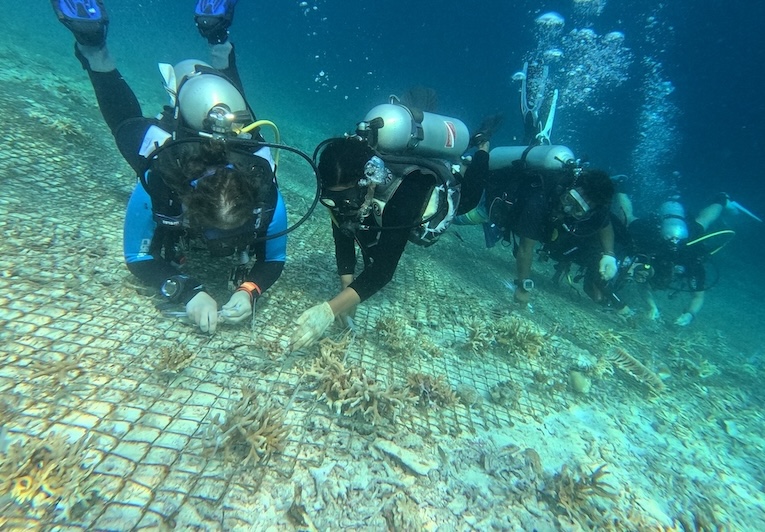
However, it is possible to participate in localised activites – such as reef restoration – that are consistent with Regenerative Tourism principles.
make your your travels mean something more
Regenerative Tourism Through Yaf Keru
Regenerative tourism through Yaf Keru offers a practical example of how visitors to Raja Ampat can actively contribute to the restoration and preservation of fragile marine ecosystems, and the coral reefs that have travelled so far to enjoy.
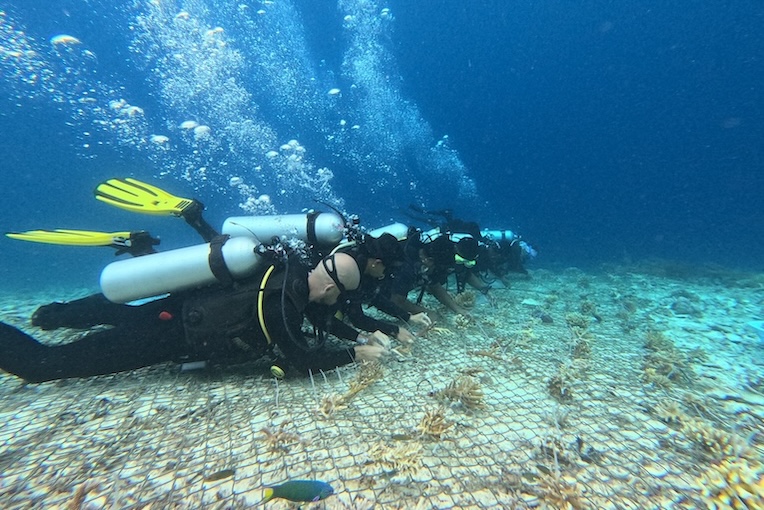
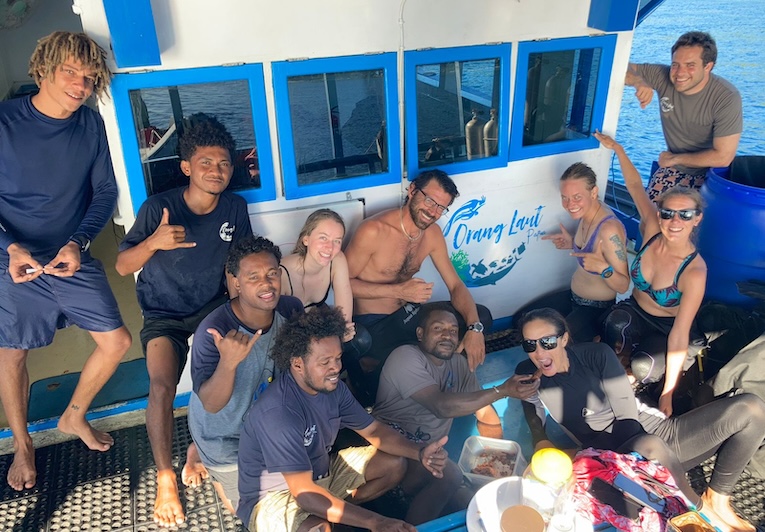
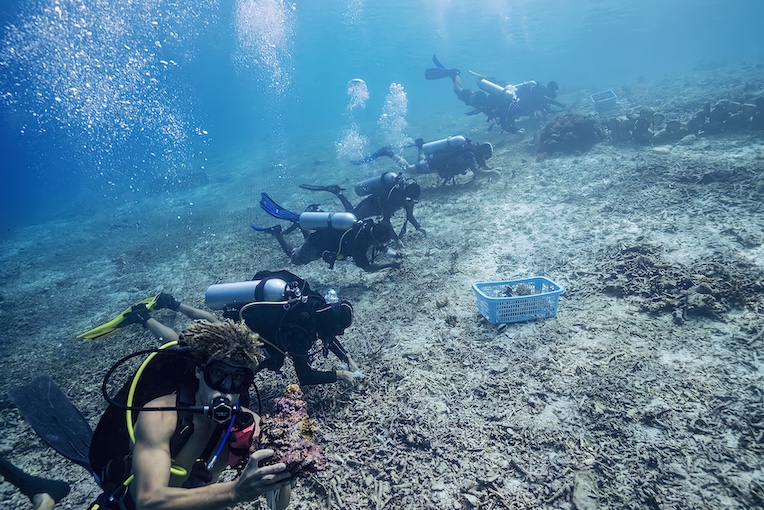
A community-based reef restoration and conservation program, Yaf Keru is consistent with the principles of Regenerative Tourism by engaging both visitors in hands-on conservation effort to restore degraded reefs, protect healthy reefs, whilst empowering local communities. Visitors to the region are invited to take part in our Reef Restoration For a Day program, where they will join our local team and learn about the threats and challenges to local reefs, participate in active reef restoration including coral fragment transplantation and substrate stabilization. Through direct and hands-on involvement in restoration and conservation process with our local team, visitors gain deeper insight into the impact and influence of traditional tourism and the interconnectedness of marine ecosystems to both local and international communities.
This not only helps to restore coral ecosystems but also provides a unique and enriching educational experience for tourists, fostering a deeper understanding of the challenges and threats facing Raja Ampat’s coral reefs, and inspiring advocacy for marine protection long after their vacation has ended.
By participating in this initiative, tourists can make a tangible difference in preserving the world’s most biodiverse marine ecosystems while supporting the livelihoods and cultural heritage of the local communities in Raja Ampat.
To join our local team for a day of reef restoration and conservation, contact us here.
100% of your donation goes to
the field.
If left unchecked, 90% of coral reefs will be threatened by 2030, with almost all reefs facing, high, very high, or critical threat levels by 2050.
If we don’t act now, future generations will not have the privilege of seeing a live coral reef, let alone receive the benefits that coral reefs provide, including food, coastal protection, livelihoods and medicine.
In Raja Ampat, Indonesia, the most biodiverse coral reefs on Earth are under threat; rapid and unsustainable development combined with climate change threaten the future of these reefs, along with the food security, heritage and livelihoods of many.
Your contribution today has a direct impact in enabling our team to work with local people to Restore, Protect and Conserve reefs in the world’s last remaining coral stronghold.
We cannot do it alone, but with your contribution we can do it together.
100% of your donation goes to
the field.
If left unchecked, 90% of coral reefs will be threatened by 2030, with almost all reefs facing, high, very high, or critical threat levels by 2050.
If we don’t act now, future generations will not have the privilege of seeing a live coral reef, let alone receive the benefits that coral reefs provide, including food, coastal protection, livelihoods and medicine.
In Raja Ampat, Indonesia, the most biodiverse coral reefs on Earth are under threat; rapid and unsustainable development combined with climate change threaten the future of these reefs, along with the food security, heritage and livelihoods of many.
Your contribution today has a direct impact in enabling our team to work with local people to Restore, Protect and Conserve reefs in the world’s last remaining coral stronghold.
We cannot do it alone, but with your contribution we can do it together.
Copyright © The SEA People 2016-2026. All rights reserved. This website is copyright monitored and protected.
Yayasan Orang Laut Papua is a registered NGO under the Ministry of Law and Human Rights Republic of Indonesia. Number AHU-0016408. Year 2019. The SEA People is a registered Charitable Association under the Gouvernement de la République in France (Numero Identification Siren 853074300) and serves as an administrative and fundrasing base for supporting the fieldwork of Yaysan Orang Laut Papua. Privacy Policy Terms & Conditions