A Citizen Science Monitoring Program for the World’s Most Biodiverse Reefs
REEF Encounters The REEF InitiativeRaja Ampat is home to the most biodiverse coral reef ecosystems on Earth, serving as a global stronghold for marine life. However, these reefs face increasing threats from climate change, resource exploitation, and rapid coastal development. Effective protection relies on real-time field data to assess threats, monitor changes, and guide conservation efforts.
REEF Encounters is a pioneering monitoring program that brings together local communities, conservationists, and divers to safeguard Raja Ampat’s Marine Protected Areas (MPAs). By integrating citizen science with cutting-edge conservation technology, the program generates critical insights into ecosystem health, human impacts, and marine park management.
The long-term survival of Raja Ampat’s reefs depends on proactive intervention and collaborative action. Through REEF Encounters, divers and citizen scientists play a crucial role in expanding our understanding of these ecosystems, ensuring they remain resilient for generations to come.
COLLABORATIVE INTELLIGENCE, protected ecosystems
What is Citizen Science?
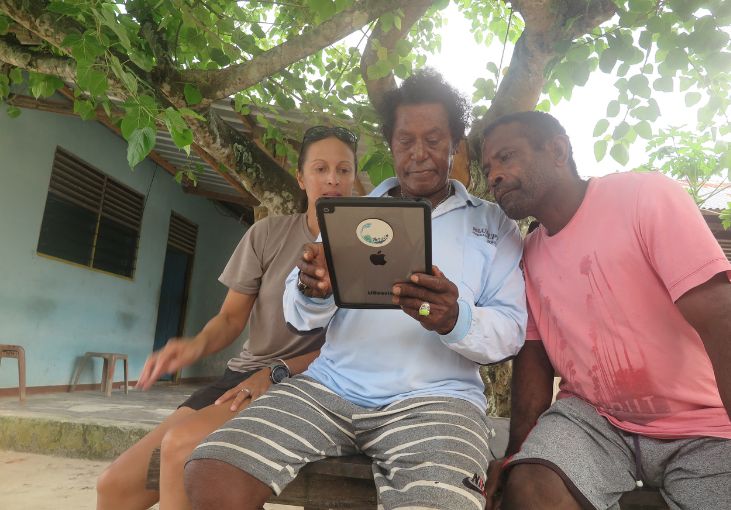
Citizen science involves public participation in scientific activities, where volunteers help collect, report (or analyze) data to support scientific understanding and conservation efforts. Under the REEF Encounters program, Citizen Science is a powerful tool in conservation, enabling divers, snorkelers, and local communities in Raja Ampat to contribute valuable field data simply by recording what they see after each dive or snorkel in a simple online form (which takes just a few minutes!).
Monitoring a 2-million-hectare marine park is an immense, costly, and near-impossible task for any single entity. However, by leveraging citizen scientists—representing hundreds, if not thousands, of eyes on the reef each day—REEF Encounters can gather large-scale and long-term data that would otherwise be unattainable.
Through structured participation, citizen scientists help track marine megafauna, monitor human impacts and pressures, and detect early signs of environmental stress. Their collective efforts fill critical data gaps, ensuring that conservation decisions are based on real-time, on-the-ground observations.
Beyond data collection, citizen science fosters awareness, engagement, and action, transforming ordinary observers into active participants in safeguarding marine ecosystems.
You don’t have to be a scientist to make a difference – every dive, every sighting, and every report plays a role in protecting Raja Ampat’s reefs.
Environmental Management in Raja Ampat
Challenges and Solutions
Raja Ampat is for many a modern success story when it comes to conservation. Over the past decade, strong collaborations between governments and NGOs have permitted the establishment of a shark sanctuary and an important network of MPAs covering almost a third of the Archipelago. Thanks to those efforts, practices such as dynamite fishing and industrial shark finning activities have almost been entirely eradicated. Yet some challenges remain, and new challenges have emerged that require immediate attention in order to limit their environmental impact.
LACK OF ECOLOGICAL DATA
Ecological data on the dynamic state of nature is often difficult to acquire, leading to gaps that hinder effective management responses. This challenge is particularly pronounced for highly mobile marine species like sharks, rays, and marine mammals, as well as for assessing the impacts of increasing tourism density over space and time. Understanding long-term changes in the marine environment requires continuous, large-scale data collection—something that conventional monitoring programs struggle to achieve.
REEF Encounters bridges this gap by harnessing the power of citizen science, enabling the collection of thousands of observational records each year to support informed conservation decisions.
TOURISM GROWTH & COASTAL DEVELOPMENT: MEASURING HUMAN PRESSURE AND IMPACT
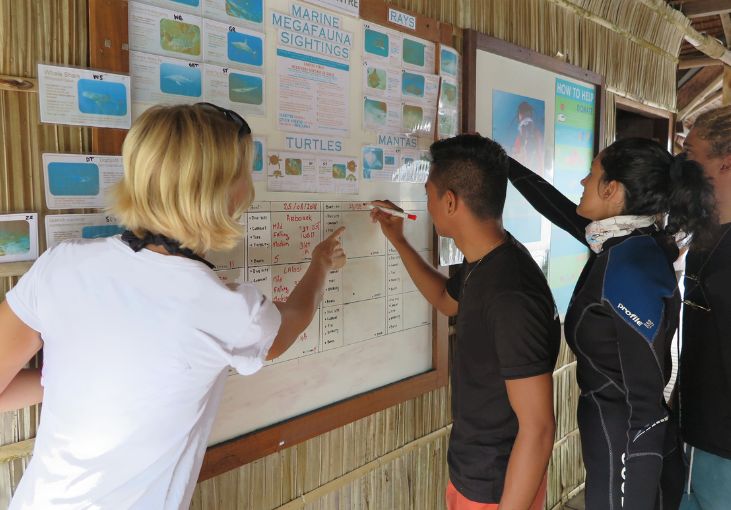
Raja Ampat’s growing popularity as a diving destination brings both benefits and risks. Without careful management, overcrowding at popular sites can lead to habitat degradation and increased stress on marine life and ecoysystems. Through our monitoring efforts, we can provide essential data that informs sustainable tourism policies and carrying capacity regulations. The REEF Encounters program was a direct contributor to the development and implementation of the Manta Sandy Ranger Station and operational standards at the site.
LIMITED MARINE PARK MANAGEMENT & MONITORING RESOURCES
Effective conservation relies on adequate funding, personnel, and equipment, yet managing vast Marine Protected Areas (MPAs) and a Shark Sanctuary presents ongoing challenges for local Marine Park Authorities. While these protections are in place, authorities are still developing their expertise and depend on capacity-building collaborations with NGOs and consultants. Patrols can be irregular, and traditional monitoring methods remain costly and sporadic, limiting their effectiveness. REEF Encounters addresses this gap by providing cost-effective monitoring solutions that optimize resource allocation and enhance conservation impact. By supporting the implementation of scalable tools, this initiative helps authorities identify key areas in need of protection, manage tourism pressures, and evaluate the effectiveness of marine park regulations, ensuring that conservation strategies are both data-driven and sustainable.
UNDERSTANDING THE SOCIO-ECONOMIC & SOCIO-CULTURAL VALUE OF NATURE
Raising awareness and developing understanding about the socio-economic value of nature and the services it provides us is a critical challenge of our time. In Raja Ampat a paradox exists; while marine megafauna are an important vector of the tourism economy; sharks, turtles and rays also represent a source of protein that is bound closely to local culture, and an income for many communities. REEF Encounters attempts to better understand the dynamics of these marine resources and promote non-extractive use.
Through education, advocacy, and collaborative science, REEF Encounters builds a foundation for long-term ecosystem resilience and sustainable resource use.
REEF Encounters PARTICIPATION
Your Role in Protecting Raja Ampat
Completing a REEF Encounter survey after every dive or snorkel is a powerful way to say, “I Care About Raja Ampat. I Take Responsibility.”
REEF Encounters thrives on stakeholder participation.
Whether you are a diver, a local community member, or a conservationist, there is a role for you in this initiative.
🔹 For Divers & Tourists: After every dive, take just 2-5 minutes to report your marine megafauna sightings and any signs of reef damage. Your observations contribute directly to conservation research and management.
🔹 For Local Communities: Join our training programs to become a reef monitor, gaining valuable skills in marine conservation while helping protect your home waters.
🔹 For Scientists & Conservationists: Contact us for collaboration or further information about implementing REEF Encounters
We can’t protect what we don’t monitor. Your observations, your data, and your voice can shape the future of Raja Ampat’s reefs.
Giving just a few minutes after each dive or snorkel may seem small, but its impact is immense. Every report helps fill critical knowledge gaps, strengthens marine protection efforts, and ensures the long-term survival of this irreplaceable ecosystem.
Contact us today if you’re willing to dedicate just 2-5 minutes after each dive or snorkel to protect the most marine biodiverse location on Earth.
REEF Encounters Distribution
An Interactive Map
REEF ECOSYSTEMS EVALUATION FRAMEWORK
The REEF Initiative
The REEF Initiative is at the heart of all our citizen science monitoring efforts, guiding how we assess, protect, and strengthen Raja Ampat’s Marine Protected Areas. Click each of below to explore the key pillars of REEF – how we track reef health, monitor ecosystems, analyze data, and create sustainable community-based conservation strategies through Citizen Science.
REEF - At The Heart of the Mission
Raja Ampat’s reefs are a cornerstone of marine biodiversity, providing food, shelter, and breeding grounds for thousands of marine species. However, they are under increasing threat from climate change, unsustainable fishing, and tourism impacts. REEF Encounters prioritizes coral reef monitoring to ensure that these ecosystems remain intact and resilient for future generations.
By systematically documenting coral health, reef structure, and biodiversity levels, we can detect early warning signs of ecosystem stress and intervene before irreversible damage occurs. This data serves as a foundation for evidence-based conservation strategies that benefit both the marine environment and the communities that depend on it.
ECOSYSTEMS - A Holistic Approach to Conservation
Coral reefs are not isolated ecosystems—they support a vast network of marine life, including large predators, migratory species, and delicate invertebrates. Monitoring these complex interactions is essential for maintaining balance within Raja Ampat’s marine environment.
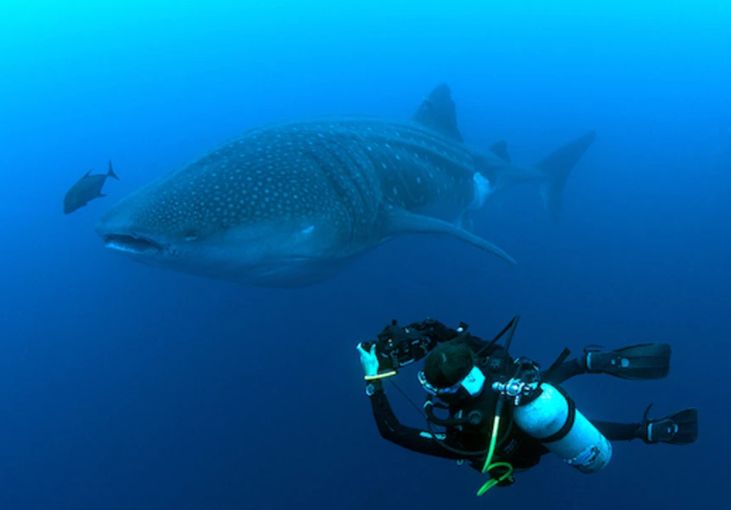
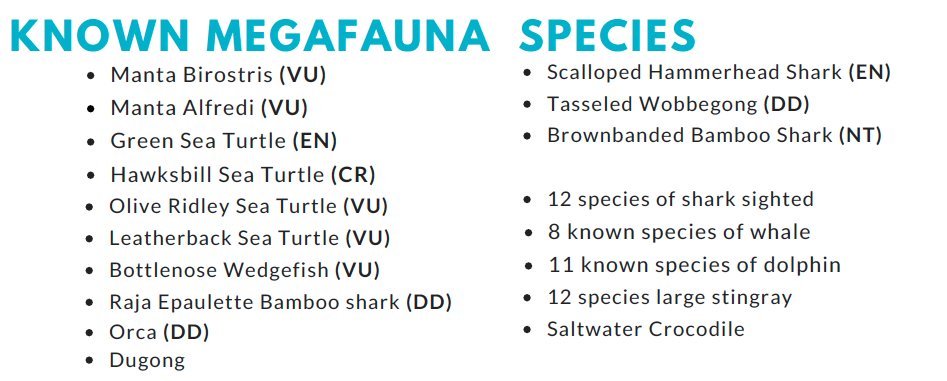
REEF Encounters focuses not only on corals but also on the broader marine ecosystem, including megafauna such as sharks, large rays, whales, dolphins, and turtles. These iconic megafauna species serve as key indicators of ocean health, and tracking their presence, absence and populations allows us to assess the stability of Raja Ampat’s waters.
EVALUATION - MPA Monitoring in Action
Gathering data is only the first step—what we do with that data is what truly makes a difference. The REEF Encounters program is designed to turn raw observations into actionable insights.
Through advanced conservation technology such as GIS mapping, AI-assisted monitoring, and the SEA Tracker reporting system, we compile and analyze trends in marine biodiversity, coral health, and human impacts. This information is shared with Marine Park Authorities, policymakers, and conservation organizations to inform adaptive management strategies.
One of our key achievements has been linking tourism density with shifts in manta ray populations, leading to improved visitor guidelines and protection measures for these iconic species. Our long-term monitoring also provides essential information on seasonal patterns, residency trends, and behavioral changes among marine megafauna.
FRAMEWORK - Strengthening Protection for the Future
For conservation to be effective, it must be sustainable. REEF Encounters is not just about collecting data—it is about fostering a long-term, locally-driven approach to marine protection.
By training community members in reef monitoring, we empower local stakeholders to take an active role in conservation. Additionally, our partnerships with Marine Park Authorities and tourism operators ensure that monitoring efforts are seamlessly integrated into Raja Ampat’s broader management strategies.
Through education, advocacy, and collaborative science, REEF Encounters builds a foundation for long-term ecosystem resilience and sustainable resource use.
100% of your donation goes to
the field.
If left unchecked, 90% of coral reefs will be threatened by 2030, with almost all reefs facing, high, very high, or critical threat levels by 2050.
If we don’t act now, future generations will not have the privilege of seeing a live coral reef, let alone receive the benefits that coral reefs provide, including food, coastal protection, livelihoods and medicine.
In Raja Ampat, Indonesia, the most biodiverse coral reefs on Earth are under threat; rapid and unsustainable development combined with climate change threaten the future of these reefs, along with the food security, heritage and livelihoods of many.
Your contribution today has a direct impact in enabling our team to work with local people to Restore, Protect and Conserve reefs in the world’s last remaining coral stronghold.
We cannot do it alone, but with your contribution we can do it together.
100% of your donation goes to
the field.
If left unchecked, 90% of coral reefs will be threatened by 2030, with almost all reefs facing, high, very high, or critical threat levels by 2050.
If we don’t act now, future generations will not have the privilege of seeing a live coral reef, let alone receive the benefits that coral reefs provide, including food, coastal protection, livelihoods and medicine.
In Raja Ampat, Indonesia, the most biodiverse coral reefs on Earth are under threat; rapid and unsustainable development combined with climate change threaten the future of these reefs, along with the food security, heritage and livelihoods of many.
Your contribution today has a direct impact in enabling our team to work with local people to Restore, Protect and Conserve reefs in the world’s last remaining coral stronghold.
We cannot do it alone, but with your contribution we can do it together.
Copyright © The SEA People 2016-2026. All rights reserved. This website is copyright monitored and protected.
Yayasan Orang Laut Papua is a registered NGO under the Ministry of Law and Human Rights Republic of Indonesia. Number AHU-0016408. Year 2019. The SEA People is a registered Charitable Association under the Gouvernement de la République in France (Numero Identification Siren 853074300) and serves as an administrative and fundrasing base for supporting the fieldwork of Yaysan Orang Laut Papua. Privacy Policy Terms & Conditions